Amazing Underwater AI Photo Editing Prompts for ChatGPT (2026)
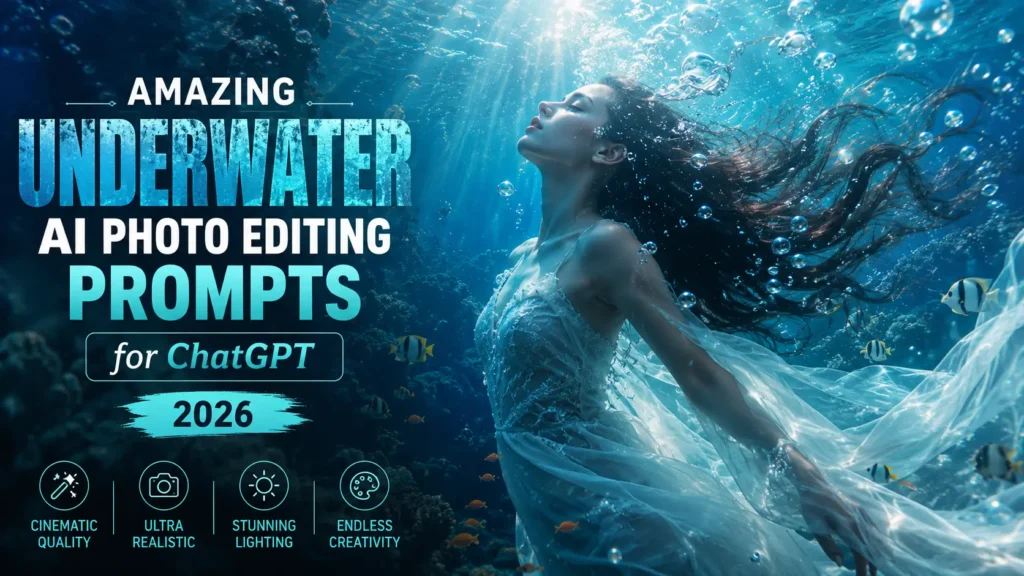
Underwater AI photo editing is one of the most eye-catching visual trends in 2026. It transforms ordinary portraits into dreamy, cinematic ocean scenes where subjects look as if they are floating peacefully under the sea. These edits often include soft sunlight rays, floating hair, bubbles, and magical marine life. With the right prompts, you can create stunning Instagram-worthy underwater portraits in seconds using AI tools like ChatGPT image generation, Midjourney, or Leonardo AI.
This style is popular because it combines beauty, mystery, and fantasy in one image. Whether you want a romantic underwater couple shot or a dramatic solo portrait, AI can bring your imagination to life with realistic lighting and textures.
What is Underwater AI Photo Editing?
Underwater AI photo editing prompts are detailed text instructions used to generate underwater-style images with AI tools. These prompts clearly describe the full visual scene, including ocean lighting effects, floating bubbles, water reflections, marine life, cinematic color tones, and subject details to create realistic and visually stunning underwater images.
This creates a cinematic and dreamy atmosphere that looks like a professional underwater photoshoot.
Why Underwater AI Photos Are Popular
Underwater AI photos are popular because they create a dreamy, cinematic, and magical look that is hard to capture in real life. AI makes it easy for anyone to get that professional underwater effect without going into the ocean or using expensive cameras.
Many creators use underwater AI edits because they:
This trend is especially popular in AI art communities, digital photography pages, gaming edits, and aesthetic Instagram profiles. Also check this: Trending Kurti Dress Change AI Photo Editing Prompt
How ChatGPT Generates Better AI Prompts
ChatGPT helps users generate highly detailed and meaningful prompts for AI image creation. Rather than using a simple phrase like “underwater photo,” it can transform the idea into a cinematic description that includes lighting, environment, mood, and camera-style details, resulting in more realistic and visually impressive images.
For example:
ChatGPT can generate prompts like:
Good AI images depend on realism, accurate lighting, strong subject detail, balanced background, and an overall cinematic look. When these elements work together, the result becomes more natural, clear, and visually appealing.
Best Underwater AI Photo Editing Prompts (2026)
Dreamy Underwater Portrait Prompt
Romantic Couple Underwater Prompt
Fantasy Mermaid AI Prompt
Dark Underwater Mystery Prompt
Fashion Underwater Photoshoot Prompt
Anime Style Underwater Prompt
Best AI Tools for Underwater Photo Editing
The best AI tools for underwater photo editing enable creators to transform ordinary images into realistic and cinematic ocean scenes, eliminating the need for professional photography skills.
Tools like MidJourney, DALL·E, and Stable Diffusion are popular because they can generate highly detailed underwater effects such as bubbles, soft blue lighting, floating hair, and deep ocean backgrounds. Content creators widely use these tools to produce fantasy-style portraits, social media posts, and artistic visuals in just a few seconds.
Other editing tools like Adobe Photoshop with AI features, Luminar Neo, and Canva AI are also very useful for refining underwater images. They help improve color tones, enhance lighting, remove imperfections, and make the final image look more professional.
By combining AI generation tools with editing software, users can achieve high-quality underwater photos that look realistic, cinematic, and perfect for digital platforms like Instagram, blogs, and portfolios.
How to Create Images Using These Prompts
Creating underwater AI images is simple. Below are some points to generate images using these prompts.
Tips for Better Underwater AI Results
For more realistic underwater edits, it is important to focus on lighting and atmosphere. Using details like “sunlight rays,” “realistic bubbles,” “deep ocean effect,” and “volumetric lighting” helps AI tools clearly understand the underwater scene and generate more natural, cinematic results.
If you want more realistic and viral-quality images, follow these simple tips:
Common Mistakes to Avoid
One common mistake is using very short or unclear prompts. When users write simple phrases like “girl underwater” or “beautiful ocean scene,” the AI does not have enough detail to create a high-quality image. This often results in basic, unrealistic, or random-looking outputs that do not match the user’s idea.
Many beginners make small mistakes that reduce image quality:
For example:
Another mistake is ignoring important details like lighting, background, and style. Without instructions such as “cinematic lighting,” “deep ocean environment,” or “soft blue tones,” the image may look flat or unnatural. Missing these elements reduces the overall realism and visual impact of the final result.
Conclusion
In conclusion, creating high-quality AI underwater images depends on clear prompts, proper structure, and attention to details like lighting, atmosphere, and style. When users avoid common mistakes and use well-written descriptions, the results become more realistic, cinematic, and visually attractive.
With the right approach, anyone can easily generate professional-looking underwater edits using AI tools. Some free tools, like Vikas Editor online, also help beginners create and edit underwater-style images easily without advanced skills. By using detailed prompts, realistic lighting descriptions, cinematic effects, and advanced AI tools like OpenAI ChatGPT and Midjourney, users can create visually stunning underwater images for Instagram, TikTok, YouTube, wallpapers, and digital art projects.
Overall, underwater AI photo editing becomes much more effective when prompts are clear, detailed, and well-organized. By using the right keywords and avoiding common errors, you can easily achieve stunning, realistic, and creative results that stand out on social media and other platforms.